January 2016
January has been a busy month both in terms of individual and collective representation within Prudential. Outside the Prudential we continue to see the government and media attack the union movement and working people standing up to protect their terms and conditions.
We saw Junior Doctors forced into Industrial Action by the actions of the government trying to impose dangerous contracts on them. A massive 98% mandate for action which would have cleared the new hurdle the Tories are trying to introduce via the Trade Union Bill saw them take action on 12th January.
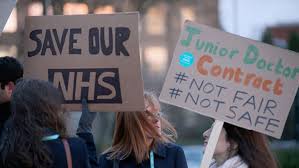 I spent an hour in the morning of 12th to join the Junior Doctors on the picket line at St Mary’s Hospital. Speaking to a number of the Junior Doctors it was clear they were frustrated at having to take action but determined to resist the changes the Tories are looking to impose. They see them as dangerous for patients and unfair on them. I was also struck by the overwhelming support of the public. In the hour I was there, I handed out 3 sheets of stickers which the public were happy to take and wear and cars, buses and taxis were constantly beeping their horns in support of the Junior Doctors as they passed.
Despite calling off the second day of action to try and make a breakthrough at the negotiating table the government have been unwilling to negotiate and a second 48 hour strike has been called for 10th February.
I would urge all members to take time to go and speak to the Doctors on the picket line, they will be really appreciative of your support.
I briefly mentioned the Trade Union Bill above and this bill seeks to prevent working people and trade unionists fighting back to protect their terms and conditions. Under the bill if you had a 63% turnout in a ballot for industrial action and 63% voted in favour, the strike would not be allowed to go ahead (or would be deemed illegal if it did) because it would not meet the new thresholds laid out in the bill.
Unite campaigned for workplace or electronic balloting (currently all ballots have to be done via post) and Labour submitted an amendment to the Bill for this to be introduced. This was defeated, so the bill has nothing to do with increasing democracy and is just an outright attack on union members.
On top of that the government will restrict union facility time within the public sector and will ban payment of union subs via payroll. The bill ignores all the good work union reps do in terms of preventing disputes escalating to formal disputes, all the Health & Safety work we do and representing individuals in times of trouble.
These restrictions currently will not be placed on the private sector but rest assured some Companies will follow suit.
Fortunately, we have a positive relationship with UKIO, PGDS and Corporate Property bargaining units and I don’t foresee any changes to the facilities our reps currently have.
Within Prudential the key collective issue was the pay talks in each of the bargaining units.
In UKIO we negotiated an agreement, which was overwhelmingly supported in a ballot of members, which included a 3% merit pot (with individuals who were rated meeting or higher guaranteed a 2% increase. The minimum Full Time Equivalent (FTE) Salary will increase to £17,117 the rate of the London Living Wage. Finally, we have an agreement to meet quarterly to look at other terms and conditions either party wants to raise.
Whilst a good offer we still aren’t making much headway in our argument that the Pay settlement ought to be based on how well Prudential is doing not on how our competitors are doing. By tying our increases to the market we believe it means Prudential staff having their pay settlements reduced as our competitors struggle with the changes within the Sector.
An example of this will be if L&G are successful in closing their Headquarters in Surrey and move the roles to Cardiff and Hove. Unite members in L&G have voted in favour of Industrial Action short of a strike and have launched a public campaign which is supported by the local community. However, if L&G continue and do shut the office the pay rates in Cardiff are lower than in Surrey so when Prudential get the market data next year the median in those roles will drop. The impact on Prudential members will be that individuals will find themselves at the top or over the top of the range and their pay increases will be restricted regardless of performance.
This cannot be right or fair and it is why Unite is opposed to the use of market data in deciding pay settlements. If the Prudential is doing well (which it is) it is not unreasonable to expect a pay rise higher than our competitors.
We have just concluded Corporate Property negotiations and we have agreed a 3% pay pot. The ballot is currently open and closes on 12th February.
In PGDS, the talks are still ongoing as we haven’t been able to reach an agreement but we hope to conclude the talks within the next few days.
Outside of the pay talks we have been in further consultations in UKIO regarding Finance Transformation and the “Day 3” structure. These discussions are ongoing and will continue throughout February and into March.
In PGDS, we have been consulted over their re-organisation. It is fair to say we are very concerned with the amount of management positions that have been created and feel within the current cost challenge this is unsustainable. Unfortunately, we are likely to see our members pay the price of this structure and we are very concerned about job security and job continuity within the Prudential Group. We have shared our concerns with PGDS and monthly meeting have been set up as PGDS continues to evolve.
On individual cases we have represented 7 members in January, with some outcomes still outstanding. However, of the cases that have been completed 75% have resulted in a positive outcome for the members.
Finally, we have had 16 members sign up to the Free Distance Learning courses we have sourced via our partnership with the Prison Officers Association. The funding of these courses going forward is under threat from the government who are looking to cut Union Learning funding by 75% over the next 2 years.
The last thing this government wants is educated workers as they might work out what they are doing to working people.